Who’s Lobbying for For-Profit Colleges in the Trump-DeVos Era?
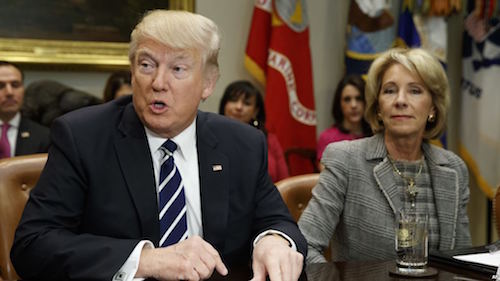
Now that former Trump University pitchman Donald Trump is the President of the United States, his Secretary of Education, Betsy DeVos, appears ready to gut the efforts made by the Obama Administration to hold for-profit colleges accountable for engaging in the same kind of deceptive, predatory behavior exhibited by Trump’s real estate “school.” A for-profit college industry
Continue Reading >>>
DeVos Makes Clear She’ll Trash Rules That Curb Predatory Colleges
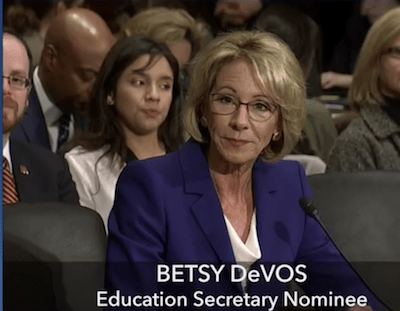
There were plenty of hints in the past few weeks, but now it seems clear as day: The Trump Administration plans, with the leadership of designated Secretary of Education Betsy DeVos, to trash the work of the Obama Administration to protect students from the abuses for predatory for-profit colleges. Billionaire DeVos, whose nomination is scheduled
Continue Reading >>>
Energy Lobbyists Gather, Blame Obama and the Pope
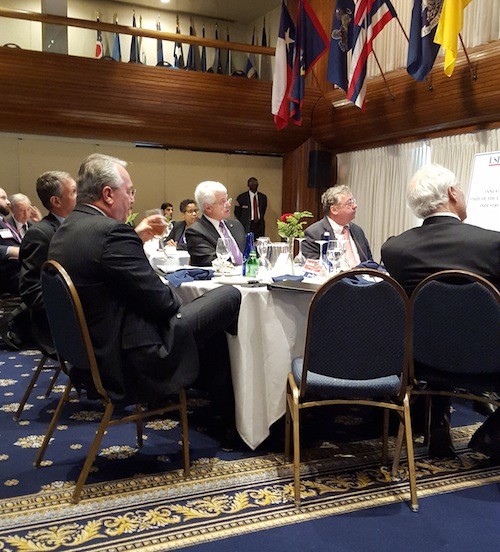
Last week, on the day after the National Oceanic and Atmospheric Administration reported that 2015 was by far the hottest year on record, the energy industry’s chief lobbyists gathered in a downtown Washington ballroom to tell each other that the real problem was not global warming, but rather efforts by the Obama Administration — and Pope
Continue Reading >>>
Charles Koch Distorts the Facts: Here Are The Ways His Money & Political Network Prevent Clean Energy Businesses From Succeeding
Earlier this week, President Obama correctly singled out the Koch brothers – Charles and David – and the Koch-funded network for standing in the way of America’s clean energy future. Charles Koch responded saying he was “flabbergasted” after hearing Obama’s remark. He continued, “We are not trying to prevent new clean energy businesses from
Continue Reading >>>
Big For-Profit Colleges Quit Trade Group APSCU
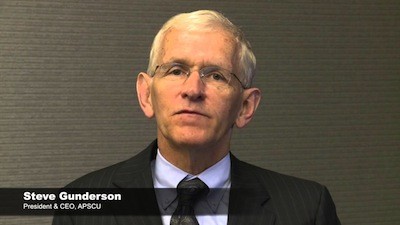
Some of the largest for-profit college companies — including, last month, DeVry and Kaplan — have recently left the industry’s main trade group, the Association of Private Sector Colleges and Universities (APSCU). The defections have come amid a rapid decline in the reputations and fortunes of many for-profit colleges — and the apparent failure of
Continue Reading >>>
Obama: We’ll Protect You Against Predatory Colleges. Students: Please Do

Speaking at the American Legion convention in Charlotte Tuesday, President Obama pledged, “For veterans going back to school under the Post-9/11 GI Bill, we’ll keep standing up against dishonest recruiting and predatory practices that target and prey on you and your families.” The President has made clear that he understands the scam perpetrated by many for-profit
Continue Reading >>>
U.S. Gas Exports Flow Through DC Lobbying’s Revolving Door
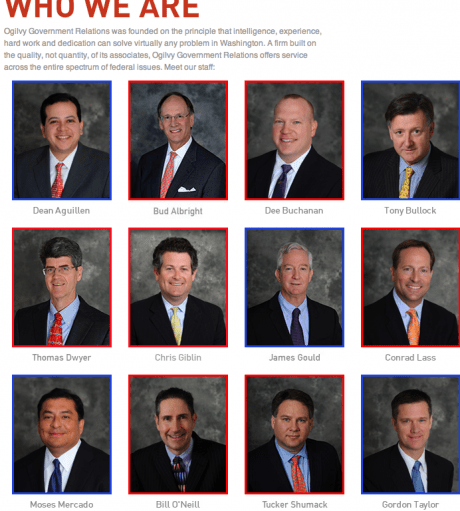
Even as President Obama pursues an aggressive new public effort to fight global warming by regulating U.S. power plants, his administration is quietly advancing an energy policy — exporting America’s liquid natural gas (LNG) — that may well raise the volume of climate-increasing greenhouse gases even more than emphasizing coal, while at the same time polluting U.S.
Continue Reading >>>
Obama Task Force on Chemical Dangers: Strong Enough?

Last year, a devastating chemical plant explosion in the town of West, Texas, killed 15 people and injured 160 more. The tragedy seemed to reawaken in President Obama a determination to improve safety and security at America’s industrial chemical facilities, whose dangers, from catastrophic accident or terrorist attack, led him, as a Senator, to call
Continue Reading >>>